Thursday, September 4, 2014

Demonland

Art by quiteproustian
The promiscuousness of infernal beings is well-known, so it isn't surprising that by-blows of their trysts are found among mortals. While rare in most of the world, those with infernal blood are the majority of the populous in Demonland1, a city-state across the mephitic Wastes from the Country of Sang. Why so many descendants of infernal bloodlines should be found in one place is a mystery, but perhaps the area had a sulfurous air of hominess for their grandsires and granddams.

Demonland proper is built upon a cluster of small islands in a lake formed by hot springs. The boiling, caustic, malodorous waters are a perfect defense --though they also make life less pleasant for the inhabitants. Demonland’s potable water comes from filtered rainwater collect in cisterns and also by magical purification of the water of the lake itself. The city is only accessible by boat and all goods and visitors make the trip over by ferry.


Demonland is nominally ruled by a Duke (or Duchess), and though this ruler’s power is theoretically absolute, it is most commonly exercised in throwing lavish revelries at which the true rulers of the city go masked. These princes (and their masks) represent the seven capital vices exalted in Demonlander religion and culture. The prince of each vice is officially appointed by the Duke but in practice is more or less elected by general consensus, as the Duke shrewdly defers to the inclinations of the mob. They serve for an indefinite tenure, usually a year and a day. The princes are meant to most perfectly embody their vice, and would-be candidates campaign vigorously (all except the candidates for Prince of Sloth, of course) for the title by engaging in the most audacious (and public) displays of sinfulness to capture the jaded hearts of the populous. The princes hold absolute authority with regard to the practice of the vice they personify and make legal proclamations and levy taxes or duties that might be pertinent as they see fit. They are allowed to keep a percentage of any monies collected for themselves.

Diabolism is the state religion of Demonland. It inverts the morality of most human faiths, promoting vice and condemning virtue. Self-interest and the pursuit of pleasure are valued over altruism and self-denial; Greed and vanity are extolled, and charity and modesty condemned. Demonlanders, however, are only a trifle less likely to fall short of the ideals of their faith than folk elsewhere, so their practice of immorality is as prone to lapses as the practice of morality in other lands.

Art by Arthur Asa
1. The correct demonym is "Demonlander." Never call a Demonlander a "demon" as this is both inaccurate and rude. "Tiefling" is just as bad.

Wednesday, September 3, 2014

Wednesday Comics: The Multiversity

"House of Heroes"
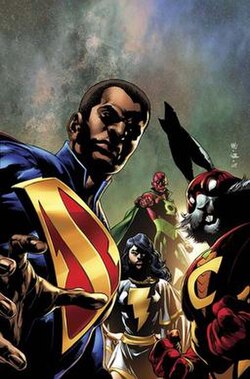
The Multiversity #1 (October 2014), Written by Grant Morrison; Art by Ivan Reis & Joe Prado

The release of DC Comics' The Muliversity #1 a couple of weeks a go seems like a good reason to take a short break from the examination of older comics and dig into something new. The Multiversity throws out a lot of characters in one issue. Here's a rundown of the major ones:

Nix Uotan (Superjudge; the last Monitor)
First Appearance: Countdown to Final Crisis #21
Last Previous Appearance: Final Crisis #7
By the end of Final Crisis, Nix Uotan was the last surviving Monitor and had been reborn in a human male body on another Earth. Apparently, he's still doing the good work of the Overmonitor, protecting the Multiverse. Or at least trying to.
The meaning of his name: Uotan apparently comes from "Wotan", Germanic god of writing and learning among other things. All the Monitors in Final Crisis have modified names of gods with a similar portfolio. "Nix" is colloquial English meaning "to put an end to" something. Nix plays a role in doing just that with the other Monitors.

Thunderer, Earth-7
First Appearance: The Multiversity #1
Thunderer is an Aboriginal Thor stand-in on an Earth that resembles the Marvel Universe. He's the last survivor of his world, which was decimated by the Gentry.
The meaning of his name: He's the superhero version of Wondjina, the cloud and rain spirits.


Superman of Earth -23
First Appearance: Final Crisis #7
Last Previous Appearance: Action Comics (2011 series) #9
President of the United States, Calvin Ellis, is also Kalel last survivor of Vathlo Island on the doomed planet Krypton. On Earth-23, the majority of the superheroes are of African descent or resemble sub-Saharan Africans.

Captain Carrot, Earth-26
First Appearance: The New Teen Titans (1980 series) #16 (insert)
Last Previous Appearance: Final Crisis #7
Captain Carrot (Rodney Rabbit) is a a sort of Superman analog on Earth-C (pre-Infinite Crisis), a world populated by cartoony, anthropomorphic animals (and obeying the laws of "cartoon physics"). Captain Carrot references meeting Superman before, which happened in Captain Carrot and His Amazing Zoo Crew! #1.


The Retaliators, Earth-8
First Appearance: (pre-New 52 as the Champions of Angor) Justice League of America (1960 series) #87; (current version) The Multiversity #1
Last Previous Appearance: (as the Meta-Militia) Countdown Presents: Lord Havok and the Extremists #6
A Pastiche of Marvel, specifically the Avengers--and as such, they also resemble the heroes of Earth-7 (there's a Wandjina the Thunderer here, too). These characters first appeared as Marvel stand-ins from the world of Angor. In Final Crisis, characters resembling the Champions of Angor (called the Meta-Militia) and their enemies, the Extremists, existed on Earth-8. In The Multiversity, they've undergone another mild revision to become the Retaliators.

Monday, September 1, 2014

The Lady or the Tiger

Our WaRP Weird Adventures game resumed yesterday and found our heroes re-united, but no closer to finding Urst's treasure. As an eldritch darkness seemed to be growing in the shadowy corners of the upstairs, they decide to make a hasty retreat to the downstairs and recover Rue's body--and maybe reintegrate her spirit.

It's not going to be so easy. When they get back to the rectory, the cat-headed man is leaning against the dying table near Rue's body, smoking a cigarette. He's with his apartment cronies: Camilla, the card-sharp and the Ogre in women's clothes. The man gives his name as Bagh. He says he's an associated of Urst's. He's been trapped in the mansion since Urst's death and he needs to snowglobe to get out.

The gang is disinclined to give it to them. He tells them to think it over, and says he meet them later in the gameroom. Rue is impatient to get her body back. She makes a run for it, using her ghost abilities to take a big flying leap toward it. Bagh suddenly transforms from a cat-headed man in a fez and a natty suit into a giant anthropomorphic tiger. He grabs Rue's spirit and pulls her off her body.

The others come rushing to help her. Gossamer (the Ogre) rushes to meet them. Rob dodges Gossamer's charge. Jacques runs past them to grab Camilla. Pao shoots Bagh, but the bullet goes right through him.

Jacques threatens to kill Camilla if the tiger man doesn't release Rue. Bagh calls Camilla "the help" and doesn't bite. Pao threatens to destroy the snowglobe. That get's Bagh's attention--but he still throws Rue's ghostly body through the ceiling. (She lands on the second floor, feeling bruised until she recalls she doesn't have a physical body to be bruised at the moment.)

Gossamer is pummeling Rob, and Camilla has twisted free and paralyzed Jacques with a magic playing card. Going for broke, Pao throws down the snowglobe then shoots it.

Bagh arms covering his head Bagh shrinks down to human-size. He might be sobbing, but no--he's laughing. "Free!" he shouts as he turns into a shadow in the shape of a tiger and bounds up through the ceiling. On the second floor, Rue sees he past and also sees the house and his furnishings appear to be attacking him.

Rue slips through the floor back to the level where her friends are. She's just in time to see the fireplace transmogrify into a caricature of a human face--Urst's face. He thanks them for returning the snowglobe. He also says he's captured Bagh and sent him somewhere where he won't get out for another millennia or so. He returns Gossamer and Camilla to their own worlds, too. Soon he says, the house will have rotated back to the Earth of the City and our heroes can go home.

Urst explains his death was only part of a ritual to gain immortality--not bodily immortality, but immortality nonetheless. His made had actually disrupted it by stealing the snowglobe that held the central element of his soul. Now, Urst is his estate. Bagh was a demon he had enslaved back in his days as a human sorcerer.


Urst allows them to leave the house with a letter to take to his dishonest lawyers that started this whole thing. When they do so, the lawyer's write them each a check for $2000 from Urst's account. Then, as they pour over the fine print, they disintegrate for the eyes of our protagonists.

Sunday, August 31, 2014

Dark Days in Noxia

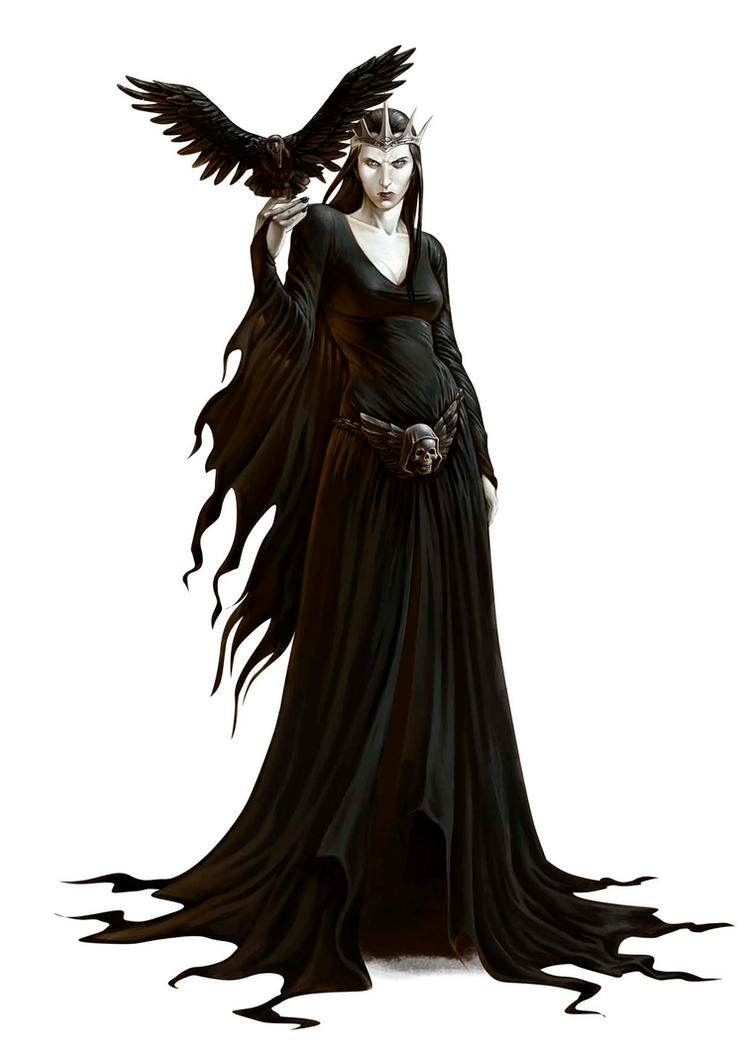
"Noxia, the northern country of Azurth, was once a region as bright and as hopeful as any other. Its Princess might be said to have been a bit moody, true, and given to overly romantic notions, perhaps, but she was young. Such things are not unexpected. It was her misfortune to fall in love with a witch. A witch with a vengeful former lover and partner in crime. Tragedy was the result, as one might well imagine: curses of eternal sleep, pacts made with dark powers, and a land cast into perpetual shadow."

-  A History of the Land of Azurth

High Concept: A fairytale kingdom gone post-apocalyptic under the rule of a Dark Queen.
Conspectus: the Sun and the Moon permanently eclipsed by a shadow moon; the blighted land and depopulated settlements stalked by humanoids, monsters, and undead; isolated human settlements under the thumb of dark elf overlords; treacherous mountain peaks; a valley of giant thorns; a vampire queen and her gargoyle minions.
Media Inspirations: The Lion, the Witch and The Wardrobe and The Silver Chair by C.S. Lewis; Maleficent (2014); the "evil queen" portions of Snow White and the Huntsman (2012); the stuff having to do with the Necromancer in Peter Jackson's Hobbit films, Hammer's "Karnstein Trilogy", Winkie Country in The Wizard of Oz (1939); Eva Green as Morgan Pendragon in the Camelot TV series. Just about anything with a country under the rule of a Dark Lord might have something.

Art by Alberto Bontempi

Friday, August 29, 2014

Empire Island Revisited


Coming just in time for the resumption (at least for one more session) of my long hiatused Weird Adventures game this Sunday, Lester B. Portly unveiled on G+ this map of Empire Island with the neighborhood key arranged in alphabetical order. Handy!

Hospitals are marked with red crosses, but I would warn user that this information is for planning purposes only and may not reflect the current location of medical facilities. For instance, Aldwood (consumed as it is by a fictional reality) doesn't have an accessible hospital.

Thursday, August 28, 2014

Witches of Ix

Art by Ian Miller
It is likely you will never have cause to visit the land of Ix, and in this, you should consider yourself lucky. The only exception might be those who have the misfortune to live in blighted, ghoul-haunted Noxia. To you Noxians an oft cold and mostly gloomy land of forests, bogs, and mountains, infested with goblins and ruled by witches, may not seem so dire. Remember though that you must cross the toxic badlands of the Waste to get there.

Ix has only one town worthy of note, and it cowers in the shadow of Hexenghast, an impossibly large and sprawling castle built beyond the memory of Ixians. Hexenghast is large enough to accommodate the four Great Houses of Ixian Witches and their various servants, mercenaries, guests, and prisoners. In fact, it is so large it houses these individuals and still has a great many halls and rooms that are unoccupied and perhaps unexplored for centuries.

Art by Yoshitaka Amano
A grand coven of the leaders of the Great Houses rules Hexenghast (no mean feat, given all the infighting and intrigue). The management of the rest land is done by lower level witches with mundane human and goblin subordinates. Mostly they are concerned with the collection of Hexenghast's due in taxes and farm goods, but they also suppress any unauthorized practice of magic and promulgate state propaganda.


There is an order of witches known as the Witchfinders. These cloaked figures appear within a day of the birth of any child in Ix. Every newborn is examined, and if the child bear some witches' mark, it's whisked off to Hexenghast and given over to one house or another to raise. When the children come of age, they cross the flickering Ghostlight Bridge that spans the chasm between Hexenghast proper and the sub-castle of the Scholomance. There, they are tutored in the dark arts until they are ready to assume their adult role in Witch society.

It has been the custom for new graduates of the Scholomance to spend some time abroad before settling into Hexenghast, engaging in the sort of infamies that youths who are schooled in the Dark Arts and confident in their own superiority are wont to engage in. This was the context in which Angvaine and Nocturose crossed into Noxia all those years ago.

Art by Yoshitaka Amano

Wednesday, August 27, 2014

Wednesday Comics: The Price (part 6)

We continue our examination of Jim Starlin's Dreadstar Saga with The Price. The earlier posts in the series can be found here.

The Price (part 6)
Eclipse Graphic Album Series #5 (October 1981) Story & Art by Jim Starlin

Synopsis: When next we see Darklock, he's discussing his resignation from the priesthood with the Lord Papal. Papal says he's sorry to see him go, but Darklock knows he's happy to see a rival eliminated. Apparently, the story is that Sister Marian died in a gas main explosion.

When Darklock is gone, the Cardinal congratulates Papal on getting rid of him. Papal berates his suboordinate: Can't the Cardinal sense Darklock's power? It's as much as a god's.


Darklock buys a ship and crews it with robots. Once it's ready, he takes the journey to the frontier and a world called Caldor. There, he makes camp and waits.


Vanth asks the stranger who he is. Darklock tells him as he removes his hood, and we see his deformed, almost skeletal visage for the first time post-burning. Darklock says he has sacrificed much to get to this point. He is here to be Vanth's comrade and mentor.

Vanth doesn't understand much of this. Darklock suggests they can talk tomorrow; For now, Vanth should return to cat people and tell them he means no harm. He also hints he knows of Vanth's sword.

When Vanth is gone, Darklock muses about the future:


Then, he thinks of Marian:


"...And I'm pray you'll have forgiven me by then."

Things to Notice:
  • Darklock's encampment on Caldor looks a lot like the Lars home on Tattooine on in Stars Wars.
  • In fact, there's a bit of a Star Wars vibe to the whole Vanth-Syzygy interaction.
Commentary: 
In the end, The Price has similar themes to Metamorphosis Odyssey: A man makes a decision with horrible consequences convinced that this is the best thing for the future.

It's funny that the titular hero of the graphic novel and series to follow has been a secondary character in stories focused on his succession of advisors. It's like Arthur had two Merlins and both of their stories got told before his got started.