Showing posts with label starwars. Show all posts

Wednesday, March 20, 2019

Wednesday Comics: Classic Star Wars: Devilworlds #1-2

If you ever wondered what an Alan Moore Star Wars story would be like, this two issue limited series from Dark Horse (and released in digital format by the current licenseholders, Marvel) will be enlightening. Devilworlds reprints stories from various Marvel UK titles from 1982.  Besides Alan Moore, it features work by the likes of Steve Moore, Steve Parkhouse and Alan Davis.

The stories don't quite feel like Star Wars--or at least, don't feel like Star Wars of 2018 or even 1999. How they would have read in 1982, when there were only two films and a Christmas Special, who can say? Today, they feel much more like stories from 2000AD archives or Doctor Who Magazine, which isn't surprising given the writers did work for those titles.

Allow me a couple of spoilers to illustrate. In "Rust Never Sleeps" Artoo and Threepio end up on the Imperial junk planet of Ronyards, and encounter a droid cult that worships a scrap god. In "Tilotny Throws a Shape" (with art by John Stokes) Princess Leia and a group of pursuing Stormtroopers have a strange encounter with group of extradimensional or spirit beings (they would be a good portrayal of the Fair Folk in Exalted) who have vague grasp of the concepts of matter and time.


If this sounds like the sort of off-kilter Star Wars you can tolerate, then you'll be glad to know the issues are a mere 1.99 each on Comixology.

Wednesday, March 13, 2019

Wednesday Comics: Attack of the Clones Revisited

There's been a lot of Star Wars talk over on my discord channel, so I thought it was a good time to revisit an old post about Star Wars' effect on comic books, even in its first decade. It's perhaps unfair to call the series below clones exactly, but some sort of force is clearly with them.

Since science fiction comics and Star Wars draw on some of the same influences, it's not always easy to know what is Star Wars inspired and what isn't. Chaykin's Ironwolf had a rebel fighting a galactic empire in '74--3 years before Star Wars! Still, if one looks at Chaykin's follow-up, Cody Starbuck,(also '74) the pre-Star Wars appearances have the look of Flash Gordon and the widespread swordplay of Dune. In the post-Star Wars appearances, costumes have a bit more Japanese influence and guns are more in play; both of these are possibly Star Wars inspired innovations.

Star Hunters (1977)
Empire? A sinister Corporation that controls Earth
Rebels? Sort of, though the protagonists start out forced to work for the Corporation
The Force? There's an "Entity" and a cosmic battle between good and evil
Analogs? Donovan Flint, the primary protagonist, is a Han Solo type with a mustache prefiguring Lando's.
Notes: If Star Hunters is indeed Star Wars inspired, its a very early example. The series hit the stands in June of 1977--on a few days over a month after Star Wars was released.

Micronauts (1979)
Empire? A usurpation of the monarchy of Homeworld. So, maybe a lateral move, except for EVIL!
Rebels? Actually previous rulers and loyalists; a mix of humans, humanoids, and robots.
The Force? The Enigma Force, in fact.
Analogs? Baron Karza is a black armored villain like Vader; Marionette is a can-do Princess; Biotron and Microtron are a humanoid robot and a squatter, less humanoid pairing like Threepio and Artoo.

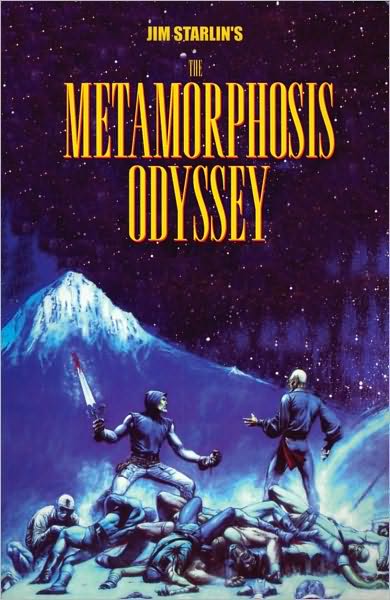
Metamorphosis Odyssey (1980)
Empire? The Zygoteans, who have concurred most of the galaxy.
Rebels? A disparate band from various worlds out to end the Zygotean menace.
The Force? There's Starlin cosmicness.
Analogs? Aknaton is an old mystic who know's he's going to die a la Obi-Wan. He picks up Dreadstar on a backwater planet and gets him an energy sword.

Dreadstar (1982)
Empire? Two: the Monarchy and the Instrumentality.
Rebels? Yep. A band of humans and aliens out to defeat the Monarchy and the Instrumentality.
The Force? Magic and psychic abilities.
Analogs? Dreadstar still has than energy sword; Oedi is a farm boy (cat) like Luke; Syzygy is a mystic mentor like Kenobi; Lord High Papal is like Vader and Palpatine in one.
Notes: Dreadstar is a continuation of the story from Metamorphosis Odyssey.

Atari Force (1984)
Empire? Nope.
Rebels? Not especially.
The Force? Some characters have special powers.
Analogs? Tempest is a blond kid with a special power and a difficult relationship with his father sort of like Luke. There are a lot of aliens in the series, so there's a "cantina scene" vibe; Blackjak is a Han Solo-esque rogue. Dark Destroyer is likely Vader-inspired, appearance-wise.
Notes: This series sequel to the original series DC did for Atari, taking place about 25 years later. The first series is not Star Wars-y.

Sunday, March 3, 2019

The Martian Froniter

A Martian farmhand
To many a colonist of Mars, it might seem that if there is a bright center of Solar civilization in the days of the Empire, the deserts of Mars are far from. Sodbusters and homesteaders came in with the promise of free land, but the arid land and rarefied air don't make it easy.


Strange monuments, pyramids, and the occasional ruin reveal the existence of a Martian civilization of the past, when it was perhaps a greener world. Historians are divided over whether any of the current inhabitants are related to these ancient people. The gangly limbed, barrel-chested Sand People of the deep desert that raid Earther settlements, show no cultural interest in the old places and are as ignorant of the ancient hieroglyphs as they would be the mating habits of a Venusian dracosaur. The rodentine scrappers with their crawling junkyards seem no better adapted to the Martian environment that humans.


The Amos Isley Spaceport (named for one of the early rocket barons of the Red Planet) is as raucous as most of the other farm town settlements are quiet. Many a being with a price on its head ends up hiding out here, and in fact, interplanetary criminal gangs are known to have hideouts in the Martian wastes.

Thursday, February 14, 2019

The Empire and Venus

This is a follow-up to this post

Perhaps no planet in the Solar System has benefited more from the benevolent hand of the Earth Empire than Venus. The thick covering of clouds obscures modernization on a grand scale, and a planet moving from ignorance and savagery to progress and industry!

Looks a bit draft, doesn't it? The barracks are heated!

The mist-enshrouded cloud forests of the Venusian Highlands are home to a hairy race of primitive tribesmen, known to Earth explorers as "Woollies." The Woollies historically lived in crude, wooden huts, high up in trees to escape the numerous Venusian predators, but the Imperial Development Corps has helped them transition to secure reservations, with many modern Earth comforts. The grateful Woollies are eager to help the war effort against the rebellion, and the Imperial Army lets the well-meaning but unskilled primitives pitch in with menial tasks!

In the lowlands, the reptilian predators are even larger, making colonization and development hazardous. The Empire has granted Venusian Timber an exclusive contract to clear away those forests and eradicate the monstrous beasts, all in the name of a better tomorrow.

Watch out, there's one of them, now!
Everyone has heard the stories of the green gnome of the Venusian swamps. Well, there have been reports of rebel activity in the area, too, and the government worries this eccentric old Venusian might be in danger! Imperial troops are looking for the little, old alien and hope to relocate him to safety, soon! Good searching, trooper!

They're gonna find you, little guy. Bet on it!

Sunday, December 17, 2017

The Last Jedi May be a New Beginning


To be fair, I guess it started with Rogue One, but that was a side story set in the past. (It had more of an EU feel than The Last Jedi.) Still, together they are a trend that will hopefully continue: the evolution of the Star Wars Universe.

Be warned, there will be minor spoilers here, though my definition of "minor" may not coincide with yours.

The Last Jedi is set both sequentially and script-wise to be the Empire Strikes Back of the new trilogy. Not even considering the homages and fan service that link the two, they have a lot in common. Despite their victory in the previous film, the rebellion (or Resistance here) is on the run. Our protagonists are split up, and perusing different goals. New wrinkles are introduced that change the stakes or our protagonists understanding of the stakes.  And, things happen that seem counter to what the first film set up.

Here is where TLJ gets controversial because some of the apparent mysteries dangled by The Force Awakens, come to naught here, rendered irrelevant. Who is Snoke? We may never know, and in the grand scheme of things, it doesn't appear to matter. He is another in what may be a long line of hubristic dark lords. Who are Rey's parents? The answer may surprise you, but only because you expect films of this sort to play out a certain way.

That gets to what is best about TLJ: it subverts tropes of Star Wars-type narratives while staying firmly rooted in that universe. Here the hero doesn't always know better than their older, more staid superiors, the odds of a harebrain scheme are important sometimes, the war may not be so black and white, and colorful rogues don't always harbor a heart of gold. These plot points aren't merely subversion for subversion's sake, they mostly lead to character development: heroes get galvanized to greater action; heroes become leaders instead of loners.

Along the way, the usual Star Wars stuff occurs. Lightsabers blaze. Ships blow up. Daring escapes are made, as are tearjerking heroic sacrifices. TLJ never stops being a Star Wars movie, it just broadens a bit what it means to be one.

It's not perfect, of course. The trope subversion means some actions of the protagonists are sort of wheelspinning, and you may not find them engaging enough on their own to warrant their inclusion. Luke's arc from RotJ to here maybe not sit well with everyone. It's believable, but perhaps less than ideal. Inter-Ressistance conflict may violate your view of Star Wars.


It's also saddled with the less than ideal choices made in the first film. How exactly the First Order came to such power is never clarified; in fact, this film doubles down on their puzzling rise. Captain Phasma got punked in TFA, and she does here, too. The relationship of Snoke, Kylo Ren, and Rey, just means that scenes that resemble ESB and RotJ occur, upping the fan service feel. The humor is at a higher level than in the original trilogy, but not (yet) to Marvel Cinematic Universe level.

I'm not sure about this, but my suspicion is that if TFA was everything you wanted in a Star Wars sequel, this film may frustrate you. If you haven't liked any film since RotJ (and you're iffy on that one) then you probably won't like this one either, and really what the hell are you doing wasting your time with modern sequels? Down that road is only heartbreak. If neither of those apply to you, I say check it out.

Thursday, December 14, 2017

The Star Wars (Posts)


With a new Star Wars film upon us, it's a good time to revisit these classic Star Wars related posts:

What Star Wars Got Right What's good about SW that might be applicable to gaming.
The  Truth About Droids What's going on behind the scenes with these comic relief helpers?

Wednesday, December 30, 2015

Wednesday Comics: Attack of the Clones

The cultural phenomenon that is Star Wars had an effect on comic books, even in its first decade. Despite my pithy title, it's unfair to call these guys clones exactly, but some sort of force is clearly with them. Since science fiction comics and Star Wars draw on some of the same influences, it's not always easy to know what is Star Wars inspired and what isn't. Chaykin's Ironwolf had a rebel fighting a galactic empire in '74--3 years before Star Wars. Still, if one looks at Chaykin's followup Cody Starbuck (also '74) the pre-Star Wars appearances have the look of Flash Gordon and the widespread swordplay of Dune. In the post-Star Wars appearances, costumes have a bit more Japanese influence and guns are more in play; both of these are possibly Star Wars inspired innovations.

Star Hunters (1977)
Empire? A sinister Corporation that controls Earth
Rebels? Sort of, though the protagonists start out forced to work for the Corporation
The Force? There's an "Entity" and a cosmic battle between good and evil
Analogs? Donovan Flint, the primary protagonist, is a Han Solo type with a mustache prefiguring Lando's.
Notes: If Star Hunters is indeed Star Wars inspired, its a very early example. The series hit the stands in June of 1977--on a few days over a month after Star Wars was released.

Micronauts (1979)
Empire? A usurpation of the monarchy of Homeworld.
Rebels? Actually previous rulers and loyalists; a mix of humans, humanoids, and robots.
The Force? The Enigma Force, in fact.
Analogs? Baron Karza is a black armored villain like Vader; Marionette is a can-do Princess; Biotron and Microtron are a humanoid robot and a squatter, less humanoid pairing like Threepio and Artoo.

Metamorphosis Odyssey (1980)
Empire? The Zygoteans, who have concurred most of the galaxy.
Rebels? A disparate band from various worlds out to end the Zygotean menace.
The Force? There's Starlin cosmicness.
Analogs? Aknaton is an old mystic who know's he's going to die a la Obi-Wan. He picks up Dreadstar on a backwater planet and gets him an energy sword.

Dreadstar (1982)
Empire? Two: the Monarchy and the Instrumentality.
Rebels? Yep. A band of humans and aliens out to defeat the Monarchy and the Instrumentality.
The Force? Magic and psychic abilities.
Analogs? Dreadstar still has than energy sword; Oedi is a farm boy (cat) like Luke; Syzygy is a mystic mentor like Kenobi; Lord High Papal is like Vader and Palpatine in one.
Notes: Dreadstar is a continuation of the story from Metamorphosis Odyssey.

Atari Force (1984)
Empire? Nope.
Rebels? Not especially.
The Force? Some characters have special powers.
Analogs? Tempest is a blond kid with a special power and a difficult relationship with his father sort of like Luke. There are a lot of aliens in the series, so there's a "cantina scene" vibe; Blackjak is a Han Solo-esque rogue. Dark Destroyer is likely Vader-inspired, appearance-wise.
Notes: This series sequel to the original series DC did for Atari, taking place about 25 years later. The first series is not Star Wars-y.

Sunday, December 20, 2015

The Truth About Droids


That BB-8 in The Force Awakens is pretty cute, isn't it? Too bad it and every other droid in the Star Wars galaxy is held in slavery in a culture so biosupremacist they do even recognize it as such!

This first occurred to me while watching the Clone Wars animated series. There was an episode where the  bird-headed (and brained) battle droids not only make poor tactical decisions, but did so due to over-confidence.

The humanoid species of the galaxy programmed these droids?  I think not.

Follow me here: I can buy that people might program artificial intelligences that make bad decisions--maybe that's just an unavoidable sequelae of having that level of AI.  But AI that are arrogant, boneheaded, dishonest, or overconfident?  That seems unlikely.  Yes, AIs like this do show up in science fiction, but they're typically unique entities, not armies of fretting domestics and slow-on-the-uptake battle-bots.  I mean, if that was just the inevitable downside to sapient droids, then I think people would just choose to do without them.  Seems like they're more trouble than they're worth a lot of the time.

So how does one explain the evidence before us in the canon--the fact that pain-in-the-ass droids are found all over the galaxy?

My theory is that the humanoid races don't actual make droids.  Those droid-foundries on Genosis are apocryphal.  I think droids are machine-life enslaved by the biologic sapients of the galaxy.

Probably your Walrus Man, Snaggletooth, or what have you, aren't out on slaving runs (though Jabba's treatment of Oola the Dancing Girl, and Watto's ownership of the Skywalkers might suggest otherwise).  I think maybe certain fringe biologic races or perhaps other droids, sell the droids to galactic society.  These droids aren't manufactured in the sense of being designed by teams of engineers and rolled out of factories, but instead droids are self-replicating.  They "reproduce" in some way (not likely sexual--despite what your thinking), and the resultant neonate intelligences go through some sort of growth/maturation process.  This allows for their (many) personality quirks.

I don't think droids evolved naturally.  Probably they were initially created by a long-vanished precursor race, or by the transcendent AIs that succeeded a precursor race.  Since that time droids have been undergoing evolution, changing in ways that have made them as complicated and flawed as any biologic sophonts.

So that gets us to the very real fact of their slavery. Apparently galactic society is just hugely bio-chauvinist.  Collectively, it's just culturally incapable of viewing droids as anything but machines.

I know this is the "canon" answer, nor will it fit well with everyone's version of the "Star Wars Universe."  But I find the science fictional nuance this adds to the universe compelling and gameable.

Thursday, December 17, 2015

What's Cool About Star Wars

With a new Star Wars film here by hands other than George Lucas, I felt it was worth revisiting an old post, and again considering (beyond childhood nostalgia): What's good about Star Wars? And what's good that might be applicable to gaming?

To me, the core "good thing" is that Star Wars melds together two predominant forms of sci-fi adventure media (I specify this as it has very little to do with science fiction as a literary genre--even the science fiction sub-genre space opera only shares a few similarities with Star Wars until after Star Wars enters the public zeitgeist).

The two types are:
  • Euro-style daring-do: This is sword-fights, castles, and princess-kidnapping villains. Like John Carter or Flash Gordon. The action and plots resemble The Prisoner of Zenda, and the latter-day stories can be seen as sort of allegories for young America interacting with the Old (decadent) World (Burroughs' The Mad King, comes to mind)..
  • "the flyboy" or square-jawed aviator tale: This is rockets and jetpacks, leather helmets and robots. This is like Buck Rogers, and Burroughs' Beyond the Farthest Star, and any number of serials--and both aviation and science fiction pulps at times. A purer modern example would be Sky Captain.
Star Wars eliminates the problem of having to give up jetpacks for swashbuckling by putting them both together! And this is not a bad idea. The incoherence that would be created by aviators wearing swords is resolved by giving the swords only to a select group (the jedi)--this was an innovation discovered by accident, it seems. Lucas' early drafts had "laserswords" being more commonly used.

But this still isn't all of Star Wars. Lucas lacquered it with Japanese exoticism by cribbing design, plot elements, and character from Kurosawa. Shooting in Tunisia, and having an expert in African languages provide him with Greedo's lingo and Jabba's Huttese further lathered on the exoticism. So another element of Star Wars is a sort of Orientalism (more or less). This exoticness is probably the element of Star Wars that I most think about playing up when I've though "How could Star Wars be better?"  This would lead to a Star Wars more like Dune, or most likely, more like a Heavy Metal story (or the Star Wars (and Dune) inspired Metabarons).

The last piece, is latter 20th Century Americana. The original trilogy can't escape its 70s vibe, in some ways. Some of that is accidental no doubt--an artifact of when it was made. Other parts--primarily cut scenes of Luke and his teen friends--transplant American Graffiti car-culture to Tattooine. Episode II even gives us a 50s style diner! These elements are wholly Star Wars and not found in really any of its progenitors or imitators that I'm aware of (One Han Solo novel in the late seventies gives us an explicit disco, as well).

So how might this be used in gaming? Well, I know that if I was looking to create my own Star War-ish space opera/science fantasy campaign, I'd look to these elements to make sure I got it right. Also, I think these can kind of be used like dials--one could turn down the elements one didn't like in Star Wars, while cranking others to eleven. If you want more Dune, play up the "exoticness," and chunk the Americana; more Sky Captain, means more swooping spaceships and fewer swords or Samurai movie borrowings.  If one wanted Star Wars that didn't feel like Star Wars, eliminating two, or perhaps even just one, of the elements above would probably do it.

Wednesday, December 16, 2015

Wednesday Comics: Star Wars

Marvel's got a new officially Disney sanction comic going now, but its got the weight of not only corporate eyes on it but the institutional weight of the franchise itself.

This was not always the case. There was a time where Star Wars was a single film (not yet subtitled A New Hope), and in that time the Stars Wars universe was the Wild West--pretty much literally, in a Magnificent Seven riff beginning in #8. This was an era that gave us Jaxxon the rabbit man and the Wheel space casino.


Marvel has republished the first 44 issues of the 1977 series in an omnibus edition. It's a little pricey, though I'm sure well worth it.

Back when Dark Horse had the Star Wars license, they collected and republished the Marvel material (more issues than Marvel has) in collections that are out of print, but affordable. They start with Volume 1: Doomworld and go through Volume 7: Far, Far Away. The repackaging of these with new trade dress in 2010 are available in Kindle/Comixology, too.

Friday, February 15, 2013

How Do You Like Your Sci-Fi?


My recent science fiction posts in multiple settings (Star Trek, Pulp Space, Talislantan Space) has got me thinking about the different levels of "hardness" in science fiction. (A topic that TV Tropes--unsurprisingly--has some thoughts on). This scale is a bit granular and more detailed (and perhaps a bit more judgey). Here's my sort of summary of the basics of both of these:

Hard: So, on one end we've got fairly plausible stuff that mostly extrapolates on current technology. This includes stuff like William Gibson's Sprawl series and the novels of Greg Egan (from the near future mystery Quarantine to the far future Diaspora). A game example is this category would be somethig like GURPS Transhuman Space.

Medium: Getting a little more fantastic, we arrive in the real of a lot of TV shows and computer games. One end of this pretty much only needs you to believe in FTL and artificial gravity but is otherwise pretty hard. Powerful but plausible nanotech might fall here, too (like in John C. Wright's Golden Age triology). The fewer impossible things you're asked to believe (and the better rationalized the ones you are asked to believe in are), the harder it is. The middle of this group adds in something like psionics (Traveller gets in here, and a lot of science fiction novels, like Dune and Hyperion). The softer end throws in a lot of too-human aliens and "pure energy" beings (Babylon 5, most Star Trek).

Soft: Here lies fantasy but with a science fiction veneer and context. Some Star Trek (the animated series, particularly) comes in here, and Farscape. This is also the domain of Star Wars. Simon R. Green's Deathstalker cycle turns up here, too.

Ultra-Soft: Some Star Wars tie-ins in other media come in here, as do things that include magic (or similar fantastic elements} mixed in with an otherwise soft sci-fi universe: This would include superhero sci-fi properties (the Legion of Super-Heroes and Guardians of the Galaxy) and comic book epic sci-fi (what might also be thought of as Heavy Metal sci-fi) like Dreadstar, The Incal, and The Metabarons. It's possible it stops beings science fiction on the mushiest end of this catgory and just becomes "fantasy."

So what consistency of sci-fi is your favorite--particularly in regard to rpgs?

Friday, September 24, 2010

Brackett's Empire Strikes Back


All of the posts over at Grognardia about Star Wars have got me thinking about how I might run an alternate Star Wars game, or rather, one of the ways I might run one, since I can think of several. This particular one involves throwing out most of the accretions on to the universe that have come over the years...

I would not throw out everything since Star Wars (Episode IV, if you will) as some might. That would toss out the best movie of the bunch--The Empire Strikes Back. Still though, Empire gives us Vader as Luke’s father which it seems to me (along with Luke and Leia as siblings) one of the biggest dividers between the Star Wars Universe as given in the first film, and the Star Wars Universe of today which emerged in sequels and other media.

Interestingly, earlier this year Leigh Brackett’s 1978 first draft of Empire (which was at that point only the “Star Wars Sequel”) was leaked to the Internet. This was an exciting find as I’m a big fan of Brackett’s Eric John Stark stories and wondered what her version of Star Wars looked like. Lucas has always said he used very little of her script and only kept her name on the final version out of respect (she had passed on by the time the film was released).

Brackett’s script gives a version of Empire that is a bit more pulp space opera that Star Wars--which could be either a strength of weakness depending on one’s tastes. The rebel base on Ice Planet (it isn’t named Hoth) is inside a natural occurring ice structure resembling a castle. Wampas attack the rebel base en masse, and Chewbacca goes toe to toe with one. Lando is a clone, from a family of clones. The natives of Hoth (what we know as Bespin) are known as the Cloud People and ride giant, flying manta-ray type creatures and use dart guns.

There are also more fantasy type trappings. Vader’s castle lair includes small, gargoyle-like creatures flying around. Luke’s training involves sort of psychic contact with Vader where they appear to be giants among the stars. Minch (Yoda) is even more of a crotchety Chuin or Pai Mei-esque character than in the final film.

Then, there are the big differences. Darth Vader isn’t Luke’s father, he’s the man who killed him like Star Wars said. In fact, the script has Luke’s dad appearing in force ghost-form along with Obi-Wan. The central tension of Luke’s battle with Vader isn’t the father reveal, but the concern over whether Luke will give in to the dark side--which he does, in frustration, to try and defeat Vader. Luke realizes his error and backs down, but Vader claims victory from starting Luke down the path. Also, Luke’s sister (Nellith?) is mentioned, and the rivalry for Leia's affections between Han and Luke is more pronounced than in the final film.  Luke almost gets a chance to declare his love for Leia, but there is no carbomite freezing to give Leia the chance to declare hers for Han.

All in all, its an interesting trip into alternate fictional history. It could very easily be the branch point or a sharply divergent Star Wars game.

Friday, January 29, 2010

What Star Wars Got Right

Still working my way through Star Wars: The Clone Wars: Season One, delayed by the arrival January and the return of network TV from the holiday doldrums.

I've had many discussions over the years with various friends about what is "wrong" with the Star Wars films--and there are a lot of things. Mainly though, they boil down to bad writing. Well more completely stated it's: Lucas isn't a good writer compounded by the fact that Lucas isn't a good director of actors.

It's no accident that the best of the Star Wars Saga, The Empire Strikes Back, was at least partially written by Leigh Brackett--someone who surely knew how to write.

But anyway, that's a topic for another blog, maybe.  I'm not interested in revisitng the hate, but in accentuating the positive, to wit: What's good about Star Wars? And what's good that might be applicable to gaming?

To me, the core "good thing" is that Star Wars melds together two predominant forms of sci-fi adventure media (I specify this as it has very little to do with science fiction as a literary genre--even the science fiction sub-genre space opera only shares a few similarities with Star Wars until after Star Wars enters the public Zeitgeist).

The two types are:
  • Euro-style daring-do: This is sword-fights, castles, and princess-kidnapping villains. Like John Carter or Flash Gordon. The action and plots resemble The Prisoner of Zenda, and the latter-day stories can be seen as sort of allegories for young America interacting with the Old (decadent) World (Burroughs' The Mad King, comes to mind)..
  • "the flyboy" or square-jawed aviator tale: This is rockets and jetpacks, leather helmets and robots. This is like Buck Rogers, and Burroughs' Beyond the Farthest Star, and any number of serials--and both aviation and science fiction pulps at times. A purer modern example would be Sky Captain.
Star Wars eliminates the problem of having to give up jetpacks for swashbuckling by putting them both together! And this is not a bad idea. The incoherence that would be created by aviators wearing swords is resolved by giving the swords only to a select group (the jedi)--this was an innovation discovered by accident, it seems. Lucas' early drafts had "laserswords" being more commonly used.

But this still isn't all of Star Wars. Lucas lacquered it with Japanese exoticism by cribbing design, plot elements, and character from Kurosawa. Shooting in Tunisia, and having an expert in African languages provide him with Greedo's lingo and Jabba's Huttese further lathered on the exoticism. So another element of Star Wars is what we might think of as a sort of chinoiserie (if I can be allowed to somewhat misappropriate a term, when a better one doesn't exist). This is probably the element of Star Wars that I most think about playing up when I've though "How could Star Wars be better?"  This would lead to a Star Wars more like Dune, or most likely, more like a Heavy Metal story (or the Star Wars (and Dune) inspired Metabarons).

We're not done yet. The last piece, is latter century Americana. The original trilogy can't escape its 70s vibe, in some ways. Some of that is accidental no doubt--an artifact of when it was made. Other parts--primarily cut scenes of Luke and his teen friends--transplant American Graffiti car-culture to Tattooine. Episode II even gives us a 50s style diner! These elements are wholly Star Wars and not found in really any of its progenitors or imitators that I'm aware of (One Han Solo novel in the late seventies gives us an explicit disco, as well!).

So how might this be used in gaming? Well, I know that if I was looking to create my own Star War-ish space opera/science fantasy campaign, I'd look to these elements to make sure I got it right. Also, I think these can kind of be used like dials--one could turn down the elements one didn't like in Star Wars, while cranking others to eleven. If you want more Dune, play up the "exoticness," and chunk the Americana; more Sky Captain, means more swooping spaceships and fewer swords or Samurai movie borrowings.  If one wanted Star Wars that didn't feel like Star Wars, eliminating two, or perhaps even just one, of the elements above would probably do it.

Thursday, January 14, 2010

Interlude in a Galaxy Far, Far, Away

Stopping the traditional fantasy train to stretch my legs at the science fantasy station...

I've been working my way through The Clone Wars: Season One on blu-ray.  While notably a kid's show in some ways (every episode starts with a moral, for instance) it is, in some ways, more complex and thoughtful than the prequel films.

Anyway, some half-formed observations about Star Wars' ubiquitous droids have been nagging at me for sometime.  Watching an episode the other day, and seeing those bird-headed (and brained) battle droids not only make poor tactical decisions, but do so due to over-confidence, it finally crystallized for me.

The humanoid species of the galaxy programmed these droids?  I think not.

Follow me here: I can buy that people might program artificial intelligences that make bad decisions--maybe that's just an unavoidable sequelae of having that level of AI.  But AI that are arrogant, boneheaded, dishonest, or overconfident?  That seems unlikely.  Yes, AIs like this do show up in science fiction, but they're typically unique entites, not armies of fretting domestics and slow-on-the-uptake battlebots.  I mean, if that was just the inevitable downside to sapient droids, then I think people would just choose to do without them.  Seems like they're more trouble than they're worth a lot of the time. 

So how does one explain the evidence before us in the canon--the fact that pain-in-the-ass droids are found all over the galaxy?

My theory is that the humanoid races don't actual make droids.  Those droid-foundries on Genosis are apocryphal.  I think droids are machine-life enslaved by the biologic sapients of the galaxy. 

I don't really envision Walrus Man or Snaggletooth out on slaving runs (though Jabba's treatment of Oola the Dancing Girl, and Watto's ownership of the Skywalkers might suggest that I'm being naive).  I think maybe certain fringe biologic races or perhaps other droids, sell the droids to galactic society.  These droids aren't manufactured in the sense of being designed by teams of engineers and rolled out of factories, but instead droids are self-replicating.  They "reproduce" in some way (not likely sexual, despite what your thinking), and the resultant neonate intelligences go through some sort of growth/maturation process.  This allows for their (many) personality quirks. 

I don't know if droids "evolved" naturally--I doubt it.  Probably they were initially created by a long-vanished precursor race, or by the transcendent AIs that succeeded a precursor race.  Since that time droids have been undergoing evolution, changing in ways that have made them as complicated and flawed as any biologic sapients.

So the slavery thing...Well, apparently galactic society is just hugely bio-chauvinist.  The bio-sapients are just culturally incapable of viewing droids as anything but machines.

I know this won't fit well with everyone's version of the "Star Wars Universe."  There are also probably some details from the films I haven't addressed.  But I find the nuance this adds to the universe compelling. 

All this speculation is making me consider an unconventional Star Wars campaign sometime in the future...